Showing posts with label Power Transformers in India. Show all posts

Wednesday, 24 January 2024

Design Principles For Building High-Quality Audio Output Transformers

The sound quality of amplifiers is largely dependent on an audio output transformer India. Peak performance demands a sophisticated approach to design that takes core materials, winding methods, and impedance matching into account. Let's delve into these principles in detail for better understanding of the design concepts that go into creating high-grade audio output transformers, which in turn improve the sonic capabilities of amplification systems.

Audio Output Transformer India

Core materials

The performance of audio output transformers is significantly influenced by the core material. Common materials bring different qualities to the table, such as nickel, ferrite, and laminated steel. The unique needs of the audio system determine the choice of core material, taking into account aspects like power management, frequency response, and cost. By adjusting for efficiency, frequency response, and saturation levels, designers may customize transformers for particular uses and enhance the overall performance of audio systems.

  • Laminated steel cores stand out for their low core losses and remarkable magnetic characteristics. They are very efficient and versatile for a wide range of audio applications, making them widely favoured. But it's crucial to pay close attention to the thickness and quality of laminations. Thinner laminations are essential because they lower eddy current losses and boost total effectiveness. This highlights the significance of manufacturing process accuracy in ensuring that laminated steel cores satisfy the demanding specifications of audio systems, providing the best possible performance and reducing undesired losses in the conversion of electrical data to sound.
  • Nickel cores are highly valued in audio output transformer applications and are perfect for high power needs because of their strong magnetic characteristics and high saturation levels, nickel cores. They are a favoured option in powerful audio settings due to their capacity to manage high power demands. Cost is a factor, though, as nickel cores can be somewhat more costly. For the purpose of controlling eddy current losses in particular, careful design is essential to minimising any negative effects. The benefits of strong magnetic characteristics and high saturation levels make nickel cores an attractive alternative for audio output transformer designs that require high power and efficiency, even with cost constraints.
  • Ferrite cores are a very attractive alternative for audio output transformer construction because of their favourable high-frequency properties and lightweight nature. Ferrite cores help make audio systems more portable and small, making them especially well-suited for applications where weight and size are crucial factors. It's crucial to remember that ferrite cores might not be as suited for high-power applications as their nickel or steel equivalents because of their potential lower saturation levels. When choosing ferrite cores, it is important to carefully weigh the unique needs of the audio system in order to strike a balance between their benefits and drawbacks in terms of obtaining peak performance.

Winding techniques

An audio output transformer's primary and secondary coil winding precision is a crucial design factor. To reduce losses, improve coupling efficiency, and keep a flat frequency response, winding procedures must be applied carefully. An efficient power transmission between the coils is ensured by proper winding, which enhances the transformer's overall performance and fidelity. The dedication to minimizing resistive losses and optimizing the transformer's efficiency is demonstrated by meticulous attention to detail in obtaining precise winding processes, which provide a refined and accurate audio signal reproduction over the whole frequency spectrum.

  • Layer winding and section winding selection in the construction of audio output transformers can have a significant impact on performance. Layer winding creates a better link between the primary and secondary coils for enhanced performance by winding each wire layer in a concentric manner. On the other hand, section winding separates the coil into parts and provides advantages like improved high-frequency response and decreased capacitance. Layer winding emphasizes overall coupling efficiency, while section winding addresses capacitance-related concerns. This design choice ultimately allows designers to customize transformers to achieve optimal performance characteristics based on the specific demands of the audio system.
  • Uniform winding and insulation are integral aspects of audio output transformer design. Maintaining a consistent and uniform winding tension is essential to preventing an uneven distribution of turns and protecting against abnormalities in performance. Proper insulation between layers and the primary-secondary coils is equally vital, maintaining dependable functioning by averting short circuits. Sustaining good electrical performance is contingent upon both ensuring the structural integrity of the transformer and putting in place appropriate insulation measures and winding uniformity. The transformer's durability and dependability in a range of audio applications are enhanced by this meticulous attention to winding and insulation.
  • Wire gauge and material choice have a significant influence on audio output transformer performance. Selecting the appropriate wire gauge is essential to guarantee that it can manage anticipated currents while reducing resistive losses. Equally important are material factors; copper is a popular material due to its high conductivity. Alternatives such as silver or other high-conductivity materials might be taken into consideration for high-end applications in order to improve electrical performance even further. The transformer's efficiency, conductivity, and general capacity to accurately reproduce audio signals are enhanced by the deliberate pairing of the right wire gauge and material with the particular requirements of the audio system.

Impedance matching

When designing an audio output transformer, impedance matching is crucial as it allows power to be transferred from the amplifier to the load as efficiently as possible. A proper impedance ratio and load matching are essential for maximizing power transmission, reducing signal distortion, preserving the audio signal's integrity, and ultimately improving the amplifier system's overall audio output quality and clarity.

  • The primary-to-secondary turns ratio in audio output transformer design is a crucial factor in establishing the impedance characteristics. This ratio directly affects the impedance ratio, thus it's important to choose carefully based on the amplifier and speaker impedance requirements. To get the best fit, the transformer must be carefully built to reflect the intended load impedance back to the amplifier. To maximize quality, reduce signal distortion, and transmit power efficiently, load impedance reflection is essential. The transformer's capacity to work in perfect harmony with the amplifier and speaker—and hence maximize the performance of the entire audio system—is greatly enhanced by careful attention to the turns ratio and impedance matching.
  • Load matching is pivotal in audio output transformer design, especially when it comes to speaker impedance. For effective power transmission, the impedance of the transformer must be properly matched to the nominal impedance of the speaker. This alignment reduces signal distortion and guarantees peak performance. Some transformers include multi-tap windings on the secondary side to increase flexibility. Users may choose alternative taps that match different speaker impedances thanks to this design feature, which gives them flexibility in how the transformer can be configured. Accurate speaker impedance matching and multi-tap windings provide flexibility, which makes the transformer a flexible part for audio systems with different speaker arrangements.

In the delicate domain of audio output transformer design, constructing high-quality transformers involves a comprehensive grasp of core materials, winding procedures, and impedance matching. When these design concepts are carefully taken into account, engineers and amateurs may create transformers that are exceptionally well-performing and reproducing audio signals with unmatched clarity and precision. The choice of core material lays the foundation for efficiency, winding techniques ensure the seamless transfer of signals, and impedance matching determines the effectiveness of power transfer.

As an exemplary manufacturer in this domain, Miracle Electronics stands out as a leading provider of audio output transformers. Their dedication to excellence, expertise in transformer design, and observance of strict production guidelines establish them as a reliable collaborator for individuals in search of superior audio components. Miracle Electronics is committed to quality, and helps make high-end audio systems a reality by offering audio output transformer India that can withstand the harsh requirements of both professionals and audiophiles.

Follow us on: Facebook & LinkedIn

Thursday, 26 October 2023

Power Transformer Efficiency – Why It Matters


Power transformers, the colossi of our electrical infrastructure that guarantee the dependable delivery of electrical energy, are responsible for the transmission and distribution of electricity across cities and nations. However, not all of the energy is transformed; some energy is lost, therefore the efficiency of a transformer cannot be said to be 100%. These losses, which can be mainly ascribed to two things—copper losses and core losses—lead to a decline in the efficiency of the transformers that falls between 95% and 99%. This efficiency of a power transformer holds paramount importance in various aspects, making it a critical factor to consider in the design, selection, and functioning of power transformers in India.

Why does transformer efficiency matter?

  • Reduced network losses: As electricity moves from power plants to end customers, electrical networks experience energy losses. Transformers along the transmission and distribution lines that are efficient cut down on network losses, resulting in a reduction in the need for energy generation.
  • Energy conservation: Optimizing the consumption of energy is a universal necessity in a time when energy resources are limited and environmental concerns are at the forefront. In order to conserve precious resources, efficient transformers reduce energy losses during power transmission and distribution.
  • Heat reduction: Transformers run cooler when their losses are reduced. Cooler transformers are safer and less likely to catch fire because they are less likely to overheat and have insulation degradation.
  • Load handling capacity: More powerful loads can be carried by efficient transformers without overheating. The improved load handling capability supports the resilience and stability of the grid.
  • Voltage regulation: More dependable and constant voltage regulation is provided by energy-efficient transformers, ensuring that electrical devices receive a steady power supply. This enhances the functionality and durability of the connected equipment.
  • Reliability and longevity: When operating, efficient transformers produce less heat, which results in reduced thermal stress. By doing so, the operational lifespan of a transformer can be substantially extended, resulting in fewer premature replacements and the corresponding environmental effects.
  • Environmental impact: Each megawatt-hour of power produced leaves behind a certain amount of environmental damage. Reduced energy losses caused by efficient transformers equate to lowered greenhouse gas emissions, carbon emissions, and environmental deterioration. This makes a big difference in maintaining the ecosystem.

The financial impact of transformer efficiency

If the foregoing wasn’t enough, we’ve created a separate section to show that transformer efficiency isn’t only about being environmentally responsible; it also has a direct impact on the financial aspect, which affects utilities, businesses, and consumers equally.

  • Lower operating costs: Efficient transformers lower operating costs, such as electricity costs and maintenance costs, for businesses, utilities, and data centres that depend on transformers to power their operations.
  • Fewer downtime costs: Less heat generation and more dependable performance lead to less downtime and lower expenses related to operations that are disrupted.
  • Reduced energy bills: The most immediate and obvious advantage of efficient transformers is a decrease in energy bills. Consumers simply pay for the energy they use, not for any that is wasted, thanks to the lower losses.
  • Incentives and rebates: Many local governments and utilities offer rebates and incentives for utilizing energy-efficient equipment, which may further lower the initial cost of purchasing efficient transformers.

Energy efficiency regulations and standards

You can see how governments and regulatory organizations around the world have come to recognize the significance of transformer efficiency. Transformers must adhere to a number of standards and laws that have been developed, with IEC serving as the Indian standard. International standards have been produced by the International Electrotechnical Commission (IEC), such as IEC 60076, which outlines power transformer efficiency classes. These guidelines are extensively used in many nations, including India. IE1 (Standard Efficiency), IE2 (High Efficiency), IE3 (Premium Efficiency), and IE4 (Super Premium Efficiency) are the four efficiency classes for power transformers as defined by IEC 60076. With each class corresponding to a specific efficiency range, IE3 and IE4 are the most energy-efficient classes.

More than merely a technical need, transformer efficiency is a key element of an ethical and sustainable approach to energy. Effective transformers are essential for resource conservation, cutting carbon emissions, and lowering energy prices since they minimise energy losses. They are crucial elements in the shift to a future with clean Ultimately, by putting efficiency first, we improve the durability and dependability of our electrical infrastructure and help to create a more sustainable and profitable energy landscape. At its core, choosing to invest in energy-efficiency transformers is a decision to sculpt a more efficient and sustainable future. Choose wisely and select only the highest-efficiency power transformers in India offered by Miracle Electronics, one of the most reputed transformer manufacturers both in India and abroad.er and more sustainable energy sources.

Wednesday, 28 June 2023

Transformers: The Unsung Heroes Of The Electrical Power Industry

The transformer is an essential component in supplying electrical power for everyday needs. These amazing machines support the entire electrical power sector by facilitating the effective transmission and distribution of electricity to buildings, commercial buildings, and industrial facilities. Yet, these heroes frequently go unseen! But here, in this blog, we’ll shed some light on these amazing equipment, giving them the respect they ought to receive!

transformer manufacturer in India

Transformers facilitate power generation

Transformers are crucial for integrating power plants with the electrical grid, and converting generated electricity to appropriate voltage levels for distribution. They also integrate renewable energy sources like solar and wind power into the grid, and enable the generation of sustainable energy.

Transformers provide for effective power distribution

Transformers make it easier to change electrical voltage levels, enabling electricity to be delivered across great distances with little loss. They also enable dependable power supply by stepping up the voltage for effective long-distance transmission, and stepping it down for safe distribution to end consumers.

Transformers enhance energy efficiency

By working at high voltage levels, transformers reduce power losses during transmission, thus increasing the total energy efficiency. Furthermore, distribution transformers ensure that power is delivered at the proper voltage levels, reducing waste and maximizing energy efficiency. This ultimately optimizes power utilization.

Transformers ensure reliable power supply

Transformers maintain a constant voltage level, compensating for fluctuations in the power grid and guaranteeing a steady supply of electricity to consumers. They also assist in reducing problems like voltage sags, harmonics, and power surges, which improves the quality and dependability of the electrical supply.

Transformers support industrial and commercial applications

Transformers supply the necessary energy for heavy machinery and equipment used in a variety of industries. In addition, they also help the efficient operation of commercial applications by supplying dependable electricity for lighting, heating, cooling, and other operational requirements.

Transformers promote safety and protection

Transformers provide electrical isolation, preventing humans and equipment from electric shocks and short circuits. Also, transformers integrate protection devices including fuses, circuit breakers, and surge arresters, to guard against damage from electrical faults and guarantee safety.

As you can see, transformers quietly deliver electricity to homes, offices, and industries in a safe and effective manner. It is impossible to emphasize their critical importance in voltage transformation, power generation, energy efficiency, dependability, and safety. With such an extraordinary role that transformers have played in sustaining the convenience of electricity in our daily life, they are yet often neglected. This clearly shows why we say that transformers are the unsung heroes of the electrical power industry.

To get your hands on these silent heroes, you can get in touch with Miracle Electronics, the leading transformer manufacturer in India, who has been offering a number of different types of transformers to clients across the globe since almost three decades now! Power, toroidal, EI, three phase, SMPS, encapsulated, UI, and planar are only some of the finest transformers on the list. Choosing any of these transformers will ensure an investment in quality.

For more information, visit: https://www.miracle.net.in/

Monday, 12 June 2023

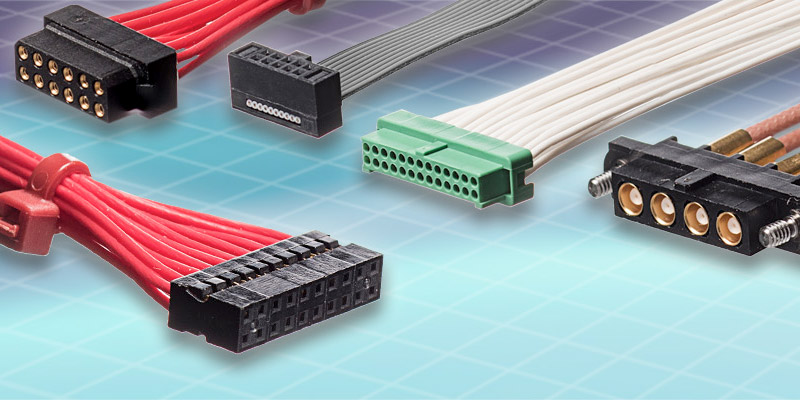
Cable Assembly, Wire Harness, Or Wire Loom – What Do I Need?

Wire looms, wire harnesses, and cable assemblies are all phrases that are frequently used interchangeably. However, they actually differ greatly, and it is because of these distinctions that their respective uses are determined. While it is true that all three share the ability to transmit data or electronic power between two points, as you will see below, each option has certain features and advantages of its own.

Looms Manufacturer in India

Why choose these options?

Cable assemblies, wire harnesses, and wire looms are all phrases that are used to refer to a grouping of various cables or wires that are connected or bonded together into a single unit. The advantage of this design is that each wire or cable can be created to precisely the appropriate length and size, and they are all grouped together in a precise fashion to avoid wasting space or adding more wiring and to make installation quicker and simpler.

Manufacturers who need to make hundreds or thousands of similar pieces of equipment frequently employ such assemblies. As a result of the constant vibration created by the automotive sector, single wires and cables were initially made popular in the 1920s and 1930s.  The wires were more protected and secured, according to the engineers, when they were tied together. Today, the majority of equipment uses a harness, assembly, or loom to organize its internal wiring.

Wire harness

These wiring systems are the most basic. A wiring harness is used to organize numerous wires as per a predetermined arrangement. A wire harness is simply a wrapper or sheath that keeps numerous wires or cables in place neatly, which is typically constructed of thermoset or thermoplastic material. To conserve space and shield them from harm while in operation, many wires of the necessary length are tied together. They might or might not have one or more connectors to terminate them. A more complicated harness might include wires running in several different directions and have a wide variety of termination components. Simple and complex harnesses both use materials like heat shrink, cable ties, or electrical tape to bind the wires together. These harnesses can typically be constructed relatively simply, which allows for speedy production at an affordable price.

The main purpose of a wire harness is to retain the cables and wires in the predetermined arrangement, minimizing movement and maximizing the use of available space while relying on the cable or wires' own sheath for protection. As a result, wire harnesses are typically a low-cost alternative. A wiring harness has the advantages of keeping the wires neatly in place, making them visible for easy fault tracing, and strengthening the assembly by binding the wires.

When the same wiring arrangement is used repeatedly, like during the mass production of items, this kind of wiring system is especially useful. The automotive industry popularized wire harnesses in the 1920s and 1930s to solve the issue of individual wires coming undone and getting damaged from the vibration of the car.

Cable assembly

A cable assembly is comparable to a wire harness, but its protective wrapping is more robust, and can be composed of vinyl, thermoplastic rubber, or shrink-wrapped thermoplastics. When exposure to environmental elements is a design consideration, a cable assembly is utilized to hold the wires or cables in place as well as to provide further protection against heat, abrasion, friction, and moisture. Individual wires and multicore cables can both be used in a cable assembly's design. The benefits of the protective wrapping against the weather are the main justification for choosing a cable assembly over a wiring harness, even if it is more expensive and loses the ability to physically trace the individual wires.

Wire loom

Wire looms are fundamentally more complicated than assemblies and harnesses, as they combine various cables and wire kinds into various groupings, frequently employing a variety of binding techniques. Wiring looms can range from being simple, integrating only a few wires, to being a complicated network of cabling, as those used in contemporary automobiles and aircraft. By lowering the wiring footprint of a product, wire looms offer space-saving as well as cost-saving designs by reducing material waste. Additionally, wire looms enable partial or full drop-in solutions for applications such as those in automobiles, aviation, and home appliances. This can significantly shorten installation timeframes and lower overall expenses.

Whatever you choose for your applications, Miracle Electronics offers subcontractors and final product manufacturers unique wire harnesses, cable assemblies, and wire looms for a variety of industries. The skilled staff at Miracle, a flexible harness, assembly, and looms manufacturer in India, can collaborate with your product design team to create custom products that are made exactly to your specifications.

For more information, visit: https://www.miracle.net.in/

Monday, 27 December 2021

Audio Output Transformers – What & Why? – Miracle Electronics

An audio transformer  is one that works in the audio range, with a working frequency range being generally between 10 to 20,000 Hz, and the impedance often used to transform the voltage or change the load. These transformer types are generally used in radios, televisions, voltage amplifiers, and other such applications.


Construction of an audio transformer

The core of the audio transformer is superimposed by a high magnetic material, with the primary and secondary windings tightly coupled, so that the flux across the original winding almost all has a phase chain with the secondary winding, and the coupling coefficient is close to 1.

Working of an audio transformer

The lowest frequency of the passband is determined by the inductance of the original winding, while the highest frequency is determined by the leakage inductance of the transformer. The original winding inductance is large, and the leakage inductance is small, in order to ensure that the transformer has sufficient passband. The saturation of the magnetic circuit and the hysteresis loss of the core can cause signal distortion. To counteract this, there should be proper load distribution and increased load current. Also, the core section should be increased, and an air gap left to reduce the saturation of the magnetic circuit. Doing so can significantly reduce the distortion of the signal.

Audio output transformer

With multiple types of audio transformers available, what we’ll focus on in this blog is the audio output transformer, which is one that is intended to isolate an input circuit from an output circuit, while providing filtering to a signal that passes through it. It is designed to operate on signals with a frequency spectrum in the audible band. Output transformers basically perform two functions – completing the matching of output impedance, and completing the conversion of voltage to current, so that higher voltage signal can be converted to an electrical signal with lower output current.

Note: Close attention should be paid to the matching of the front and back impedance, in order to avoid signal distortion caused by the reflection. Also, the impedance of the load must be consistent with the impedance required by the power amplifier stage, through the impedance of the output transformer, in order to maximize the load.

Designing an audio output transformer

When you’re deciding on the kind of audio output transformer you want for your application, the choice of the core material and its size depends upon the frequency response, power levels, and harmonic distortion. Audio output transformers are generally preferred to use both high-permeability cores and the largest number of coil turns to create high primary inductance. Remember, by changing the number of wire turns in each winding, transformers can be manufactured to have various impedance ratios. You can choose to have your specific customized audio output transformer India to suit your particular application requirements at Miracle Electronics, where every transformer manufactured is of the highest quality, which is proved by their RoHS and REACH compliance certificates. So, get in touch whenever you are looking for the finest quality audio transformers!

Wednesday, 22 September 2021

Why Are Toroidal Transformers A Better Choice? – Miracle Electronics

Like every transformer type, a toroidal transformer is designed to change the AC current, without the need for any type of movement or action, on the part of the component. But, what makes it different is that its doughnut shaped core is made of cold-rolled silicon steel, which boosts the performance of the core, as compared to any other traditional laminated core. 


The core is wrapped with a coil that generates magnetic field lines, which are completely coincident with the magnetic circuit of the core. This results in a reduced excitation energy and core loss. A toroidal transformer thus benefits the application by offering high electrical efficiency and less magnetic interference, packed in a small size, which also makes it absolutely light in weight.

Distinguishing the outcomes produced by a toroidal transformer

By using an efficient toroidal transformer, large amounts of energy can be saved. Let us take an example. You can take two different types of transformers for the same application; for instance, one being an EI-core transformer 2 x 24V 50 VA, and the second being a toroidal transformer 2 x 9V 50 VA. Loading both these transformers with several load resistors, and the loading power ranging from 5 to 40 Watts, the energy losses can be measured to find the remarkable difference between the two outcomes. The difference between the input and output powers is the energy loss that is converted into heat within the transformer. Moreover, dividing the output power by the input power can also bring to you the transformer’s efficiency. Calculating with different numbers of load resistors, you’ll be able to clearly see the significant differences in the outcomes. The toroidal transformer will result in much less losses than an EI transformer.

Where can you use a toroidal transformer?

Toroidal transformers are used widely in home appliances and other electronic equipment with high technical requirements, such as computers, lighting, telecommunications, audio equipment, medical equipment, and automatic control equipment. You can choose to use the same for your equipment too. And, to bring about even better results, you can opt for a customized toroidal transformer, manufactured by professional and expert toroidal transformer manufacturers in India.

Designing a customized toroidal transformer

Before designing a customized toroidal transformer, there are certain parameters that need to be considered; some of them being –

  • The industry – With every industry having different requirements, the industry and equipment in which the toroidal transformer needs to be used should be thoroughly considered and understood.
  • Input voltage – Generally, the toroidal transformer is designed according to 220V, but it can also be customized as per any special requirements regarding the input voltage.
  • Output voltage and current – Whether the toroidal transformer is single or multi-wound, the output voltage and current of each winding needs to be considered well.
  • Output power – The wattage obtained by multiplying the output voltage and the output current also needs to be contemplated.
  • The installation method – The kind of installation method needs to be carefully decided upon, such as bracket installing, middle hole potting, full potting, etc.
  • Any other special requirements – Any other special requirements such as the lead length, or whether the lead needs to be added with a terminal plug, and other such considerations, need to be reflected upon.

Whether standard or customized, whatever your choice may be, Miracle Electronics are the toroidal transformer manufacturers in India you can rely upon to satisfy all your requirements!


Wednesday, 16 June 2021

Choosing Segmented Cap Transformers Over Conventional Ones - Miracle Electronics

When you’re operating a critical application, something involved with medical, aerospace, or military, you’re always trying to settle down on a few crucial decisions. One such decision may be determining the kind of transformers you want to use, upon which lots of electrical and signal-based outcomes will depend. 

For instance, if you are into the medical industry, deciding upon the kind of medical isolation transformer in India you want to use for your applications, you may be unable to decide whether you should opt for a simple conventional one, or go in for a more radical one installed with segmented cap technology. If this is what you are unable to decide upon, you’re at the right place! We’ll help you know how a basic transformer is different from a segmented capped one, and how the latter can prove to be beneficial.

The basic construction of a toroidal transformer

A toroidal transformer has a basic method of construction which involves the following steps.

Creating a steel core – insulating the core – winding a magnetic wire around the core to create a primary winding – insulating the primary – winding a magnetic wire over the insulation to create a secondary winding – and finallyinsulating the secondary to complete the transformer.

Mounting the transformer

Once the transformer is manufactured, it is mounted either using a mounting washer and bolt, or by filling the center of the transformer with an epoxy, with a hole for a bolt.

The role of segmented core caps

Toroidal transformers are generally plain, but there are certain applications where additional segmented core caps are used. These core caps are mainly used to support the primary and secondary windings in alternate sectors to reduce leakage current. The insulating segments insulate the windings from the core over the full range of windings, allowing for double-wall insulation between adjacent windings, thus reducing leakage current to a great extent, as compared to conventional toroidal transformers. They also help to directly cool the core through ambient or forced air, without interfering with the insulation.

The construction of core caps

Several modular electrically insulating segments are snapped or joined together to form an annular or semi-annular core cap design to fully or partially cover the transformer core. The number of such segments that are required to complete a core cap is predetermined, based on the angle at which the adjacent walls are placed to each other. This is because the walls, which include male and female connector portions, are all disposed at a predetermined angle relative to each other, typically 30, 45, or 60 degrees. Typically, there are identical core cap segments in a single core, but there may also be groups of different segments spanning different arcs. The latter is basically seen in customized core cap designs that require certain particular properties and characteristics.

The benefits of a core cap design

Reduced costs – When a core cap design involves snapped segments, the cost to assemble the caps is reduced because the process of snapping requires lesser skill level than other techniques. Also, the cost to tool a smaller part for injection-moulding is lesser than the cost of tooling a larger part.

Reduced time – When a core cap design meets safety specifications for creepage and clearance, the manufacturing time is reduced because of no requirement for ground and inter-winding insulation and outer wrap. Moreover, the windings can be wound on one single machine, thus reducing the handling time.

Reduced temperature rise – When a core cap design allows airflow around the core and windings, while keeping creepage and clearance specifications safe, the temperature rise is reduced because there will be a direct path for the heat to escape from the un-insulated core into the environment, without having the windings and insulation to trap the heat within.

Reduced weight – When a core cap design includes mounting holes, the weight of the transformer is significantly reduced because there will be no center epoxy or mounting washer required.

As you can see, segmented cap transformers can offer significant reduction in leakage current, heat rise, costs, and time invested, in comparison to standard toroidal transformers. All of this combined, segmented cap transformers are lighter, faster, less expensive, and are rated for extended power for the same volume. This makes segmented cap transformers the ideal choice for critical applications like medical isolation transformers. So, whenever you are looking for an advantageous medical isolation transformer in India, you know what you have to choose. But, if you want a transformer that complies with applicable requirements, you need a manufacturer who you’re sure will provide you with only genuine standard transformers. One such reliable manufacturer  is Miracle Electronics, where every transformer is RoHS and REACH compliant, and also adhered to the regulations under UL 60601-1 standards.

Thursday, 25 February 2021

EAF Transformers – Why & Where Are They Used - Miracle Electronics

EAF transformers – The name may make you think about them to be complex transformers with a complicated functioning. But, they aren’t so complex. EAF transformers are Electric Arc Furnace transformers that are generally used with electric arc furnaces or ladle metallurgy stations to transform high-voltage low-current electrical power to low-voltage high-current electric arcs inside an EAF furnace to melt scrap steel. The scrap steel is exposed directly to the electric arc produced by the EAF transformers inside an electrical arc furnace to temperatures up to 1800°C. 

These transformers help in maintaining a perfect balance in the electric circuit, as a lot of charge accumulation in one portion of the circuit can lead to load shedding or wearing down of the device. This advantage and functioning of an EAF transformer is what helps it to be used in a number of applications, such as in gas factories, steel plants, and in industries manufacturing calcium carbide.

Benefits of using an EAF transformer

There are a lot many benefits of using an EAF transformer, some of the advantages being mentioned below.

ü EAF transformers are industrially manufactured devices, each unit being sold by registered dealers, who procure complete details of the customer before making the sale. This is because these EAF transformers are highly expensive, which is why you must always purchase from a leading transformer manufacturer in India, to ensure safety and the guarantee of making a right purchase.

ü The details of EAF transformer manufacturers are always available online, which makes it easy to track them down. This means there is no possibility of any unscrupulous practices, which is why these industrial devices are rarely mishandled, thus saving you from any such problems, as you can be sure you’ve made a legitimate purchase.

ü An EAF transformer is manufactured with the help of machines, and each component is made by expert manpower, which means you can expect a strong-built device at your service. This means there is completely durability. And, if you purchase from a genuine transformer manufacturer in India, one like Miracle Electronics, you can rest assured of having the best after sales service too.

Applications of EAF transformers

Gas factories – Electricity is used in gas factories to perform the process of catalysis, that is, combining or breaking down the components of a gaseous mixture, which cannot be achieved by normal processes of applying heat and pressure. EAF transformers are useful to carry out such specific reactions.

Steel plants – Steel plants require melting of iron at high temperatures, and a sturdy furnace that can help them achieve a large amount of heat, which can liquefy the iron, so that the various components can be formed from it. This is where EAF transformers can help.

So, whether your application is that in a gas factory or steel plant, or even in an industry that manufactures calcium carbide, you can rely on EAF transformers to easily and effectively carry out your power transformations from high-voltage low-current electrical power to low-voltage high-current electric arcs inside an EAF furnace.


Wednesday, 24 February 2021

Where And Why Are Isolation Transformers Used - Miracle Electronics

Isolation transformers are one of the most unique types of transformers  used in the industrial sector in machineries. These are transformers that transfer electrical power from a source of AC power to an equipment or device, while isolating the powered device from the power source for safety reasons. They provide galvanic isolation with no conductive path present between the source and load; the isolation used to protect against electric shock, and to suppress electrical noise in sensitive devices.

Applications of isolation transformers

Sensitive equipment – Isolation transformers block the transmission of the DC component in signals from one circuit to the other, while allowing AC components in signals to pass. And, there is special insulation between the primary and secondary windings, specified to withstand a high voltage between them. These characteristics make isolation transformers ideal for use in sensitive equipment like medical devices, laboratory instruments, and computers.

Pulse circuits – Certain small isolation transformers are used for isolation in pulse circuits.

Electronics testing – Isolation transformers are used in electronics testing equipment to avoid exposing live metal in a device under test, which may otherwise prove hazardous because of the high voltage. When isolation transformers are used, there is no conductive connection between the primary and secondary windings, which results in a very small leakage current flow if the exposed live metal is connected to the earth.

Equipment at elevated potentials – Isolation transformers are used for the power supply of devices that are not at ground potential; for example, radio antenna masts. Without the isolation transformers on such masts, the lighting circuits would conduct radio-frequency energy to the ground through the power supply.

Benefits of using isolation transformers

Voltage control – Isolation transformers have their primary and secondary windings isolated from each other; thus reducing the electrical noise between them.

Impedance matching – The low voltage side of a transformer has low impedance, while the high voltage side has high impedance. Isolation transformers can generate superior impedance matching of a critical load to an electrical circuit. And, internal low impedance isolation transformers can create complete isolation from the input AC line.

Other benefits – There are many other benefits that an isolation transformer can provide, such as continuous filtering of power line noise, reduction of electrical surges, removal of neutral-to-ground voltage and noise, improved reliability, and lowered costs.

With all these benefits, you can have isolation transformers installed in a variety of different critical applications, may it be laboratory equipment, hospital equipment, sensitive equipment, electronics testing equipment, diagnostic testing equipment, telecom, and equipment related to transactions. No matter what your application, you can get the best quality isolation transformers by partnering with Miracle Electronics, the most reliable and genuine isolation transformer manufacturer in India. Here, you’ll get only RoHS and REACH compliant transformers that adhere to UL 60601-1 standards, in terms of minimum enclosure leakage current, limited maximum earth leakage current, minimum temperature rise at load, maximum high voltage test between windings, excellent creepage distance, and excellent air distance.

Friday, 14 June 2019

How Do Stabilizers And Transformers Deliver Safe Power - Miracle Electronics

Every electric and electronic appliance relies ontransformers for their power supply, because transformers are the equipment that can increase or decrease the voltage to the required amount so that appropriate power supply is directed. If inappropriate power supply is directed, the equipment may either not work (if the power supply is insufficient), or it may cause disastrous results and breakdown of the appliance (if the power supply is higher than required). Stabilizers and transformers are thus ideal devices required for transferring appropriate amount of power supply to ensure safe and effective power-based operations.

Monday, 27 May 2019

Where And Why Are Medical isolation Transformers Used - Miracle Electronics


Medical isolationtransformers in India are used to transfer electrical power from a source of alternating current power to an equipment or device, while isolating the powered device from the power source. Thus, medical isolation transformers are one of the safest transformers used with a number of benefits offered tothe application and the operator. They provide galvanic medical isolation and are used to protect against electric shock. These transformers are used to suppress electrical noise in sensitive devices, and to transfer power between two circuits that are not connected. These transformers are used in applications in diversified fields, especially in applications that require the best safety means.

Friday, 28 December 2018

Who Invented Printed Circuit Boards - Miracle Electronics

Printed Circuit Boards, or PCBs in short, can be seen in every electronic device that we use. It could be the smartphones we are holding in our hands all day long, the laptops we use for work, the televisions/radios we entertain ourselves with, the air-condition/heaters we adjust the temperatures with, or anything else – everything uses a PCB. While PCBs are a very common element for every electronic device today, it wasn’t an easy job to invent this amazing component. It took years for the inventors to invent and then develop the PCB to make it such an easy and effective component today. While the entire credit for developing PCBs goes to Paul Eisler, it wasn’t only his efforts that brought us this incredible piece.

Friday, 13 July 2018

What Are Current Sense Transformers?

Current sense transformers are a type of instrument transformer that are used to measure current values in a conductor, mainly used in high-current circuits. In such transformers, the primary has very few windings and is connected in series with the conductor carrying the current that is to be measured. This is why current sense transformers are also known as series transformers. The secondary, on the other hand, has many windings wound around a ferromagnetic core. These transformers are easy to implement, accurate, and reliable under even the harshest environmental and thermal conditions. An ideal current sense transformer has zero winding resistances, infinite inductance, perfect coupling and no parasitics.


Sunday, 17 June 2018

Why Should You Hire The Services Of Contract Electronics Manufacturers?


If you are looking for contract electronics manufacturing services to have your electronics build because you lack adequate facilities to do it in-house, it is definitely a wise decision. There is a whole number of benefits that go beyond the fact that the costs of establishing your own manufacturing facility is just too huge when compared to outsourcing the process. If you are able to find the right contractor for your purpose, the benefits will help you provide optimal returns of your investment.


Sunday, 6 May 2018

How Have Power Transformers Proved To Be A Boon For Today’s Industries?


With the increasing dependability that we all have on electronics and with the massive number of machineries and appliances that work on electricity, the continuous flow of electricity is very much in demand. To bring in safe amounts of electrical energy by converting the massive surge of electric power from the power grid into a usable voltage by devices, transformers play a very crucial role. Every industry today highly depends on these transformers, without which the production processes fail to work.


Monday, 22 January 2018

How Do Transformers Help In Transmitting Electricity To End Users

Have you ever wondered how electricity is brought into our homes and offices? You know that it is superbly huge amount of power generated at the power stations, right? And, you also know that this huge supply if brought into your homes can cause serious damage to your appliances and death too. So then, how does this huge power get into your homes so safely? It is through a power system comprising of various step up and step down transformers. Step up transformers increase the voltage, while step down transformers decrease the voltage.


Friday, 15 December 2017

How To Identify Professional Cable Harness Manufacturers

Would you like to work with professional cable harness manufacturers in India or amateurs, to provide you with cable harnesses for your application? Obviously, you would opt for professionals. But, how would you know whether the manufacturer you are selecting is professional or amateur? Is there some kind of label that can differentiate them? Well, there are certain things that distinguish and make professionals stand out. Consider these elements to make sure you are purchasing your cable harnesses from the right ones.


Sunday, 22 October 2017

Which Are The Different Types Of Transformers

Transformers are the most basic and most important elements within a power circuit that help the right and safe amount and voltage of power to flow to the end customers. There are three basic types of power transformers in India that can be used in any application, ranging from low to medium to high. You need o choose the right type of transformer from these three that would suit your requirements and application. The most important consideration is your energy requirement, which is rated in kilo volt amperes (kVA). After all, every transformer type is designed to meet specific application requirements. Choosing the wrong transformer type may lead to disastrous results!
 Which Are The Different Types Of Transformers - Miracle Electronics

Friday, 18 August 2017

All That You Must Know About Power Transformers

Power transformers are electrical components used in a variety of residential, commercial, and industrial applications to transfer energy between circuits with the help of electromagnetic induction. These equipment have a primary and secondary winding with varying magnetic fields that induce a varying electromotive force or voltage. Depending upon the application, power transformers can step up or step down the voltage level within the power network.

 Power Transformer Manufacturer in India | Miracle Electronics

Thursday, 27 July 2017

Should You Substitute Wire Assembly Connectors?

Any kind of substitution can be a 50-50% chance of success; and so is the case with substitution of wire assembly connectors. Substituting wire assembly connectors can help in coming up with lesser expensive versions of wire assemblies, but it may also lead to issues with the interface if the substituted connector is of inferior quality, or if the substitution is not done correctly. This makes it absolutely necessary to choose the right connector and the right engineer/manufacturer to connect your connector to your wire assembly correctly. From the long list of wire assembly manufacturers in India, one name you can rely upon to provide you with the best connectors and engineering is Miracle Electronics. Here, you have the option to choose from a variety of connectors like circular, D-38999 circular, D-Sub, and Mill Spec. connectors, and can have your wire assemblies customized as per your requirements.

 Should You Substitute Wire Assembly Connectors? Miracle Electronics